
Spices for Beginners: What to Buy First and How to Use Them

Start with five: black pepper, garlic powder, onion powder, paprika and cumin. Add chili powder, oregano and cinnamon next. That handful covers most weeknight cooking, and the rest of this guide shows what each one does, how to add a new one without wrecking dinner, and how to keep them fresh. If you would rather skip the guesswork of combining them, we built Spice Blends Made Easy so you can pick a blend and a batch size and get cooking.
Recommendations
- Buy five basics first: black pepper, garlic powder, onion powder, paprika and cumin. Everything else can wait.
- Try one new spice at a time, in a dish you already know, and change nothing else.
- Taste as you cook. Under-seasoning is easier to fix than over-seasoning.
- Buy small jars, label the date, keep them away from the stove, and smell them before you use them.
- Blends such as taco seasoning or Italian seasoning let you use several spices at once while you learn how they fit together.
Table of Contents
- The five spices to buy first
- What each spice tastes like
- How to try a new spice without overpowering dinner
- Easy ways to use starter spices all week
- Keep your spices fresh
- Where beginners go wrong
- Our perspective
- Make it easier with a subscription
- FAQ
- Sources
The five spices to buy first
Several university extension programs and dietitian groups publish starter lists, and they overlap heavily. The University of Illinois Extension’s “Spice It Up!” starter kit names ten spices and herbs: garlic powder, onion powder, paprika, black pepper, cumin, chili powder, ground ginger, ground turmeric, cinnamon and dried oregano. Its budget tip is to begin with just the first five.
That advice is sound for a reason you will notice quickly: those five do different jobs.
- Black pepper adds bite and lifts almost any savory dish.
- Garlic powder and onion powder give the savory backbone of soups, rubs, sauces and burgers, with no chopping.
- Paprika brings color and a mild, sweet-pepper flavor. Smoked paprika adds a campfire note.
- Cumin is the earthy base of chili, tacos and beans.
If you cook chicken, rice, eggs, roasted vegetables or anything with beans, these five already give you a dozen different dinners just by changing the proportions.
The second shelf
Once the first five feel familiar, add the ones that open up whole cuisines:
- Chili powder for Tex-Mex dishes, chili and taco night.
- Dried oregano for tomato sauces, pizza, Greek-style chicken and anything Mediterranean.
- Cinnamon for oatmeal, baking and, in small amounts, savory stews.
- Cayenne or crushed red pepper when you want clean heat.
- Ground ginger and turmeric if you cook curries, rice dishes or soups.
The Academy of Nutrition and Dietetics’ guide to your spice rack goes a little further, adding bay leaf, thyme, nutmeg, clove and an Italian herb blend. It also notes that more intricate recipes may call for specific spices, but a basic rack is a good place to start. You do not need all sixteen of those on day one.
Whole or ground?
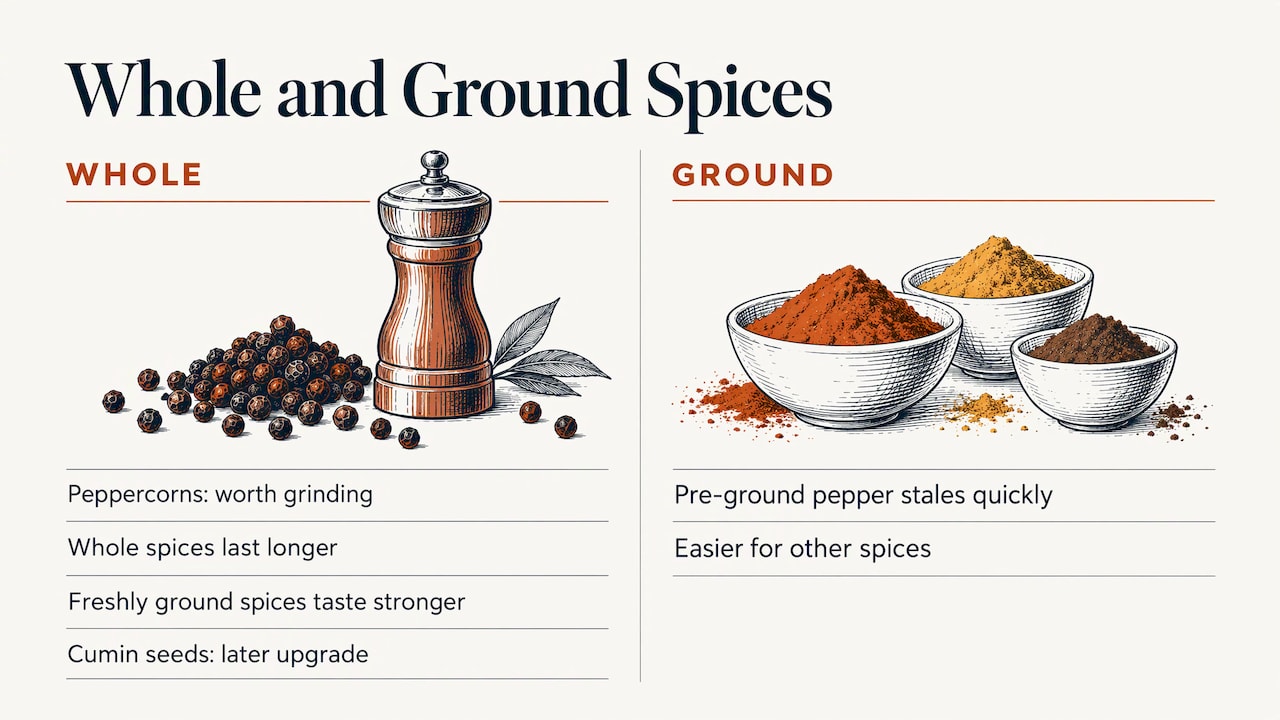
For pepper, whole is worth it. Epicurious recommends whole peppercorns with an adjustable grinder because pre-ground pepper goes stale quickly. For everything else, ground is easier when you are starting out. Food & Wine’s food editor points out that whole spices last longer and taste stronger unless you grind them freshly, so you can graduate to cumin seeds and a spice grinder later.
What each spice tastes like
The fastest way to cook with a spice is to know its personality. This table pulls descriptions from the American Heart Association and the University of Florida IFAS, plus a few easy pairings.
| Spice | Tastes like | Try it on |
|---|---|---|
| Cumin | Toasty, earthy, slightly peppery | Black beans, tacos, root vegetables, stews |
| Smoked paprika | Smoky and woody | Eggs, rubs for meat or tofu, tomato sauce |
| Paprika (regular) | Sweet to mildly hot | Eggs, cheese, potatoes, goulash |
| Cayenne | Fiery hot | Curries, meats, Mexican dishes, stews |
| Cinnamon | Sweet and warm | Muffins, waffles, fruit crisps, sweet potatoes, stews |
| Thyme | Earthy | Bean dishes, roasted vegetables |
| Turmeric | Pungent, a little bitter | Rice, egg dishes, curry powders |
| Ginger | Peppery and sweet at once | Poultry, carrots, curries, dipping sauces |
| Nutmeg | Warm, spicy, sweet | Baked goods, cream sauces, applesauce |
One more useful note: oregano is pungent and peppery with a slightly bitter edge, which is why Mississippi State University Extension pairs it with tomatoes, mushrooms, poultry and lentils. Rosemary is bold and piney, so it suits roasted meat, fish and squash.
What counts as a spice, anyway?
Spices come from the seeds (cardamom, coriander, black pepper), flower buds (cloves), fruits (chilies, allspice), bark (cinnamon) and roots (ginger, turmeric) of plants, according to Britannica Kids. Leafy parts used the same way are called herbs. That is why oregano and thyme sit in the same cabinet but are technically herbs. If you are curious how dried and fresh herbs trade places in a recipe, our guide to fresh vs. dried herbs covers the conversion. The short version from the Academy of Nutrition and Dietetics: in a pinch, use 1 part dried herb for 3 parts fresh.
How to try a new spice without overpowering dinner
The most common beginner mistake is adding three unfamiliar spices to a new recipe, then not knowing which one you dislike. Use this method instead.
- Pick one spice. In a Wirecutter interview, chef Padma Lakshmi suggests using just one spice you are curious about in a neutral dish you already make, such as mashed potatoes or eggs.
- Start small. A quarter teaspoon in a dish for two is plenty. In SBS Food’s seven-spice guide, chefs note that turmeric has a strong background flavor so it is used in low quantities, and half a teaspoon of chili powder in a slow-cooked meal will not make it hot.
- Change nothing else. The same guide advises adding a little to a favorite dish and then noticing how it tastes different. That is how you build a flavor memory.
- Taste as you go. The Academy of Nutrition and Dietetics advises tasting and seasoning throughout cooking, because under-seasoning is easier to fix than over-seasoning.
- Write it down. One line in your phone: spice, amount, dish, verdict. In a month you will have your own cheat sheet.
For whole spices, Lakshmi dry-roasts them over medium heat for a couple of minutes until fragrant, and does it the same day she uses them. It is a small step that makes cumin and coriander seeds taste noticeably bigger.
A few cooking-timing rules
- Dried herbs such as basil go in at least 15 minutes before a dish is done. Fresh basil goes in right before serving, per the American Heart Association.
- Crushing dried thyme between your fingers releases more of its flavor.
- Cinnamon is naturally sweet, so in some recipes you can cut back on sugar.
- Cumin and coriander are a natural pair in Mexican and Indian cooking.
- Do not shake spices from the jar directly over a steaming pot. University of Wyoming Extension notes that steam saps flavor and causes caking. Measure into a dry spoon first.
Easy ways to use starter spices all week
Think in combinations, not single spices. Here are a few that need no recipe.
- Roasted vegetables: olive oil, salt, black pepper, garlic powder and paprika. Our guide to spices for vegetables goes deeper on matching spices to specific vegetables.
- Weeknight chicken: paprika, garlic powder, onion powder, salt and pepper, rubbed on before roasting.
- Taco night: cumin, chili powder, garlic powder and a pinch of cayenne. Epicurious suggests cayenne plus cumin as a simple starting mix for Southwestern or Mexican dishes. If you want a shortcut while you learn the proportions, a mild taco spice mix gets you to dinner, and our own taco seasoning recipe shows the ratios so you can adjust the heat yourself.
- Fish and shrimp: our fish taco seasoning and shrimp seasoning guides give you the blend, the ratios and the method.
- Tofu: a plain block takes on whatever you give it, so see best spices for tofu.
- Oatmeal or toast: cinnamon and a pinch of nutmeg.
If you want to explore beyond the basics, a ready-made blend is a gentle way in. Food & Wine’s editor describes mixes like garam masala, za’atar and taco seasoning as an easy way in, and says a good mix lets beginners add flavor without thinking about it. Our tandoori seasoning blend is a good next step for chicken, and the Italian seasoning, Cajun seasoning, Asian five spice and curry powder blends show how a handful of single spices combine into a recognizable cuisine.
Cardamom, allspice and other “second-wave” spices
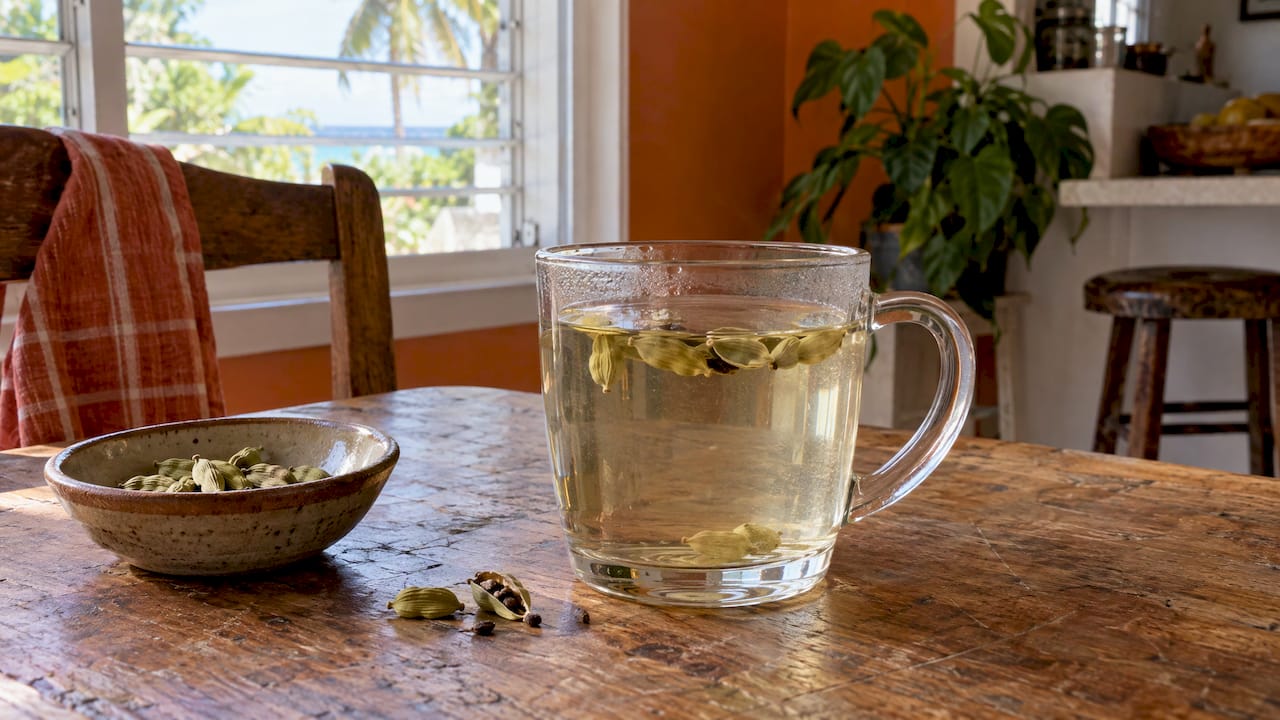
When you are ready for something less common, these are good first picks. According to Bon Appétit, allspice is a single dried berry, not a blend, with notes of clove, cinnamon and black pepper, common in Caribbean and Mexican cooking. Cardamom pods smell sweet, piney and almost menthol-like, and about 10 whole pods or 100 seeds equal 1 teaspoon of ground cardamom. Oregon State University Extension adds that the flavor lives in the small seeds, so whole pods should be crushed before use. A simple first test, as Lakshmi suggests: steep cardamom in hot water as a tea.
Keep your spices fresh
Spices rarely spoil, but they fade. A jar bought years ago can taste like colored dust, and then you add more and more to compensate.
- Where: a cool, dry, dark place. NDSU Extension specialist Julie Garden-Robinson recommends exactly that, and not over the stove. Wyoming Extension adds that heat, moisture and direct sunlight are the enemies.
- How long: NDSU says to use spices within two to three years, with whole spices like cloves lasting longer than ground. The Academy of Nutrition and Dietetics says most should not be kept more than a few years after opening.
- Label the date you opened each jar.
- Do the sniff test. If the aroma is weak, add a bit more. If you smell nothing, it is time to refresh. As spices age, their essential oils and other compounds degrade, which is why the sniff test works.
- Buy small. Lakshmi buys spices in small quantities, around 3 ounces, and keeps them in glass jars away from light.
- Paprika and chili powder keep their color longer in the refrigerator, per Wyoming Extension.
- Homemade blends: the University of Illinois Extension advises airtight, labeled containers kept away from the stove or sink, shaken before use and used within 6 months.
If your cabinet is a jumble, our guide on how to organize spices lays out a simple system that keeps them fresh and findable.
Where beginners go wrong
- Buying twenty jars at once. You will use five. Start with the basics and add one new spice when a recipe calls for it.
- Ignoring the date on old jars. If it has no smell, it adds no flavor.
- Adding everything at once. One new spice, one familiar dish.
- Seasoning only at the end. Taste at the start, the middle and just before serving.
- Assuming origin does not matter. Bon Appétit notes that nutmeg from different regions has its own tasting notes but is fairly interchangeable. Still, when you cook a specific tradition regularly, buying spices from that cuisine’s country of origin is worth considering.
Our perspective
Most people do not struggle with spices because they lack taste. They struggle because a recipe lists seven jars, they own two, and they have no idea what a quarter teaspoon of anything should do.
We started Spice Blends Made Easy with a chef from the Bahamas who cooks the way a family kitchen does: by feel, with care, and with food that feels like home. Our blends are hand-crafted, and the idea is simple. When someone sees a blend and a batch size sized to the meal, they stop worrying and start cooking.
That is why we let you choose your blend, choose your batch size and select the flavor profile you actually like. Cooking gets less intimidating when the proportions are already worked out and you can taste how the spices fit together. New blends arrive every month, so there is always one more to try without buying another shelf of jars.
Learn the single spices, because they teach you what each one does. Then let a good blend carry you through the busy weeknights.
Robert
Make it easier with a subscription
If you want the blends without the trial and error, a Spice Blends Made Easy membership gives you unlimited access to our blends and meal recipes, adjustable batch sizes and new options each month. The Pro plan is $5 per month or $40 per year, and every subscription comes with a 30-day money-back guarantee. See the Pro plan or start from the Spice Blends Made Easy homepage.

Browse the Spice Blends blog for more pairing ideas as you build your confidence.
FAQ
What spices do I need in a kitchen as a beginner?
Black pepper, garlic powder, onion powder, paprika and cumin cover the most ground. Add chili powder, oregano and cinnamon next. The University of Illinois Extension’s starter kit uses a similar list and suggests beginning with the first five if you are on a budget.
What are the five types of spices?
Spices come from seeds, flower buds, fruits, bark and roots. Black pepper and coriander are seeds, cloves are buds, chilies and allspice are fruits, cinnamon is bark, and ginger and turmeric are roots. Leafy plant parts used for flavor are called herbs.
How do I know which spices to use in a dish?
Start from the cuisine. Cumin and chili powder point to Mexican food, oregano and basil to Italian, and cinnamon and nutmeg to baking. Then taste as you cook. A blend sized to your recipe is a good way to learn which combinations work together.
How long do spices last?
NDSU Extension recommends using spices within two to three years, with whole spices lasting longer than ground ones. Label the date you opened each jar, and smell it before you use it. A weak aroma means weak flavor.
How can I try a new spice without ruining the meal?
Add one spice you are curious about to a simple dish you already make, such as eggs or mashed potatoes, and start with a small amount. Taste, adjust, and note the result.
Sources
- Spice It Up! | University of Illinois Extension
- Get to Know Your Spice Rack | Academy of Nutrition and Dietetics
- Common Herbs and Spices: How to Use Them Deliciously | American Heart Association
- Shopping for Health: Herbs and Spices | University of Florida IFAS
- Sodium and Spices | Mississippi State University Extension
- Spices of India | Oregon State University Extension
- Prairie Fare: Add some spice to your menus | NDSU Extension
- Spice and Herb Tips | University of Wyoming Extension
- 20 Essential Spices Every Home Cook Needs | Bon Appétit
- The Only Eight Spices You Need | Epicurious
- Essential Pantry Spices | Food & Wine
- Padma Lakshmi interview | Wirecutter
- If you only have 7 spices in your kitchen | SBS Food
- Spice | Britannica Kids