
Cajun vs. Creole Seasoning: What Actually Differs
Cajun seasoning leans on ground peppers and runs hotter. Creole seasoning leans on dried herbs and tastes earthier and rounder. Both start from the same base of paprika, garlic, onion, salt and pepper, so you can swap one for the other in most dishes. What matters at the stove is how much heat and how much herbal flavor you want in the pot. If you want that balance set to your own taste instead of whatever a jar decided for you, the easiest route is a blend you can adjust, and we explain how at the end.
Recommendations
- Cajun blends emphasize black, cayenne and white pepper for a peppery heat. Creole blends add more dried herbs such as thyme, oregano and basil.
- Most sources call Cajun the spicier of the two, but heat varies from blend to blend, so the label’s ingredient order tells you more than the name.
- The two are interchangeable 1:1 in most recipes. Add a pinch of cayenne when you swap Creole in for Cajun, and a little thyme or oregano when you go the other way.
- Both usually contain salt, so taste the dish before you add more.
- Building your own blend lets you set the heat, herbs and salt level once and reuse it.
Table of Contents
- Cajun vs. Creole seasoning at a glance
- What is in each blend
- Which one is spicier?
- The cooking traditions behind the jars
- Which one should you use?
- Swapping one for the other
- Tuning a blend to your kitchen
- Our view: stop choosing between two jars
- Try a blend built around your taste
- FAQ
- Sources
Cajun vs. Creole seasoning at a glance
This is the comparison most cooks are after. It reflects how Food & Wine and MasterClass describe the two styles.
| Cajun seasoning | Creole seasoning | |
|---|---|---|
| Dominant flavor | Peppery heat with an earthy undertone | Herbal, savory, rounder |
| Key spices | Cayenne, black pepper, white pepper, paprika | Paprika, black pepper, garlic and onion powder, a pinch of cayenne |
| Herbs | Few or none, sometimes oregano | Thyme, oregano, basil, sometimes rosemary or bay leaf |
| Heat | Usually hotter | Usually milder |
| Classic dishes | Gumbo, red beans and rice, fried chicken, boils | Jambalaya, shrimp and grits, tomato-based dishes |
| Swap rate | 1:1 for Creole | 1:1 for Cajun |
Think of it as a dial. Cajun sits toward the pepper end and Creole toward the herb end, and plenty of store-bought and homemade blends land somewhere in the middle.
What is in each blend
Cajun: peppers first
MasterClass describes Cajun seasoning as an array of ground peppers, black, cayenne and white, that gives a peppery heat with an earthy undertone. Allrecipes lists the usual commercial lineup as salt, paprika, red pepper, black pepper, thyme, celery seed, garlic powder and onion powder. Salt-free versions exist, which helps if you are watching sodium.
Creole: the herb shelf joins in
Creole blends keep that base and add more from the herb drawer. Food & Wine says Creole tends to include more dried herbs like ground thyme, basil and oregano. Tasting Table adds rosemary and bay leaf to the list and describes the result as a salty, spicy, herby punch. The exact recipe varies by brand and by family.
A typical home recipe, like the New York Times Creole seasoning recipe, makes about a quarter cup from smoked paprika, chili powder, onion powder, garlic powder, cayenne, salt and black pepper. The same recipe notes that most Louisianans keep a container of Creole or Cajun seasoning within reach of the stovetop.
Why the line is blurry
Historically, Cajun seasoning was the simpler of the two, four or five ingredients built on paprika or cayenne, salt and pepper. Creole seasonings built on that base with more spices and herbs, according to Chili Pepper Madness. That site also says the two have since commingled and become much more similar. Taste of Home makes the same point from the ingredient list: both contain black pepper, garlic powder, onion powder, cayenne and smoky paprika, and Creole simply adds dried herbs like thyme and oregano.
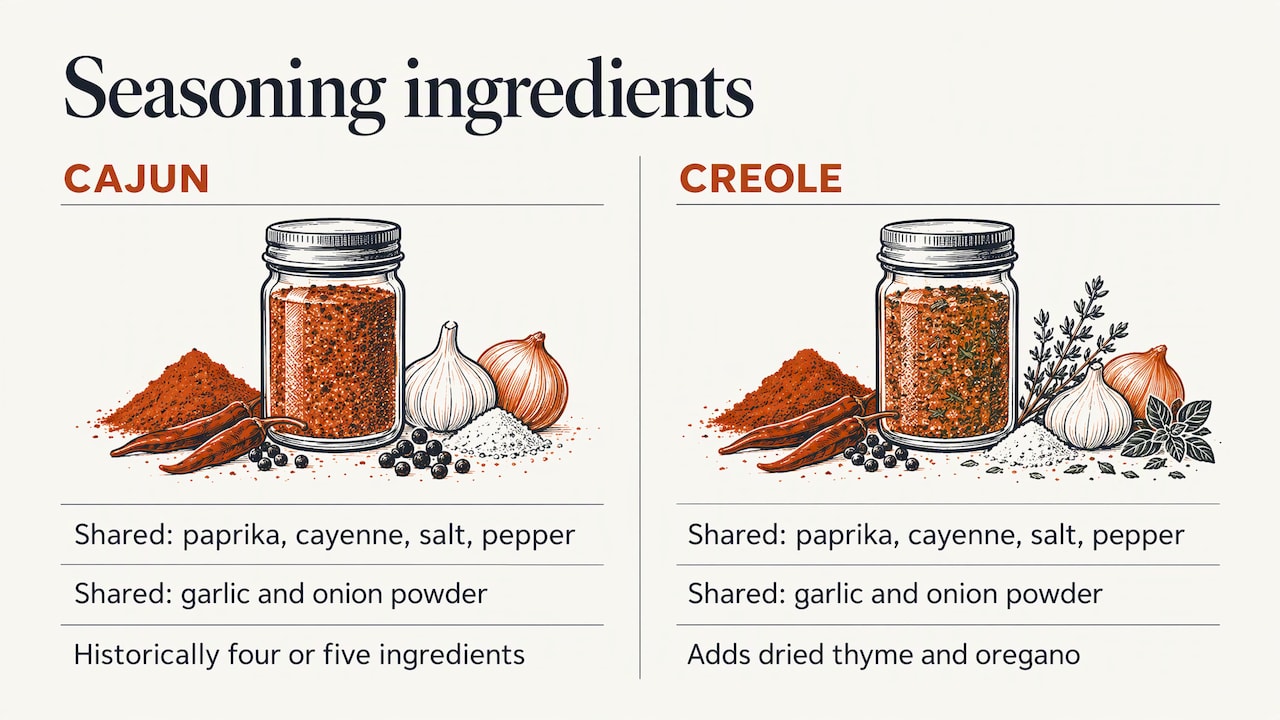
That is why two jars with different names can taste nearly identical, and two jars with the same name can taste very different.
Which one is spicier?
The common answer is Cajun. Food & Wine notes that Cajun food is often considered spicier than Creole thanks to cayenne and black pepper, and MasterClass says Creole lacks Cajun’s strong kick.
In practice, heat is a property of the individual blend. SPICEography points out that no published heat measurement exists for these blends. The heat comes from capsaicinoids, the compounds in red pepper, so the closer red pepper or cayenne sits to the top of the ingredient list, the hotter the blend is likely to be. Ingredients on a label are listed from most to least by weight, so that is a quick way to compare two jars.
A useful rule when you read a label:
- Cayenne or red pepper near the top: expect real heat, whatever the front of the jar says.
- Paprika first, herbs and garlic ahead of cayenne: expect a mild, savory blend.
- Salt first: expect a salty blend, which matters for how much you use.
Salt is the other variable
Heat gets the attention, but salt changes a dish just as much. Delish warns that the blend already contains salt, so go easy on adding more until you have tasted the dish. The same holds for Cajun blends. If you season the meat, the sauce and the table, the salt stacks up quickly.
The cooking traditions behind the jars
The two seasonings grew out of two related cooking styles, and the dishes help explain the flavors.
Both cuisines rely on the so-called holy trinity of onions, celery and bell peppers, and share gumbo, jambalaya, and red beans and rice. According to Food & Wine, Creole cooking is centered on New Orleans and uses tomatoes, butter-based roux and more dairy. Cajun country cooking is spicier, with cayenne, garlic, smoked pork and a darker, oil-based roux. Roux is the cooked flour-and-fat base that thickens gumbo and stews.
Tomatoes are the quickest clue. Taste of Home says Creole dishes generally use tomatoes and tomato-based sauces, while Cajun cuisine traditionally does not. If you want more background on how place shapes a cuisine, this local food culture guide is a good companion read, including the role of tomatoes, crawfish, butter and cream in Louisiana cooking.
Author Jessica B. Harris, quoted by Tasting Table, calls Creole food the world’s original fusion food, shaped by African, Italian, French, Portuguese and Spanish influences. That fusion is where the herbs in Creole blends come from.
So, is jambalaya Cajun or Creole?
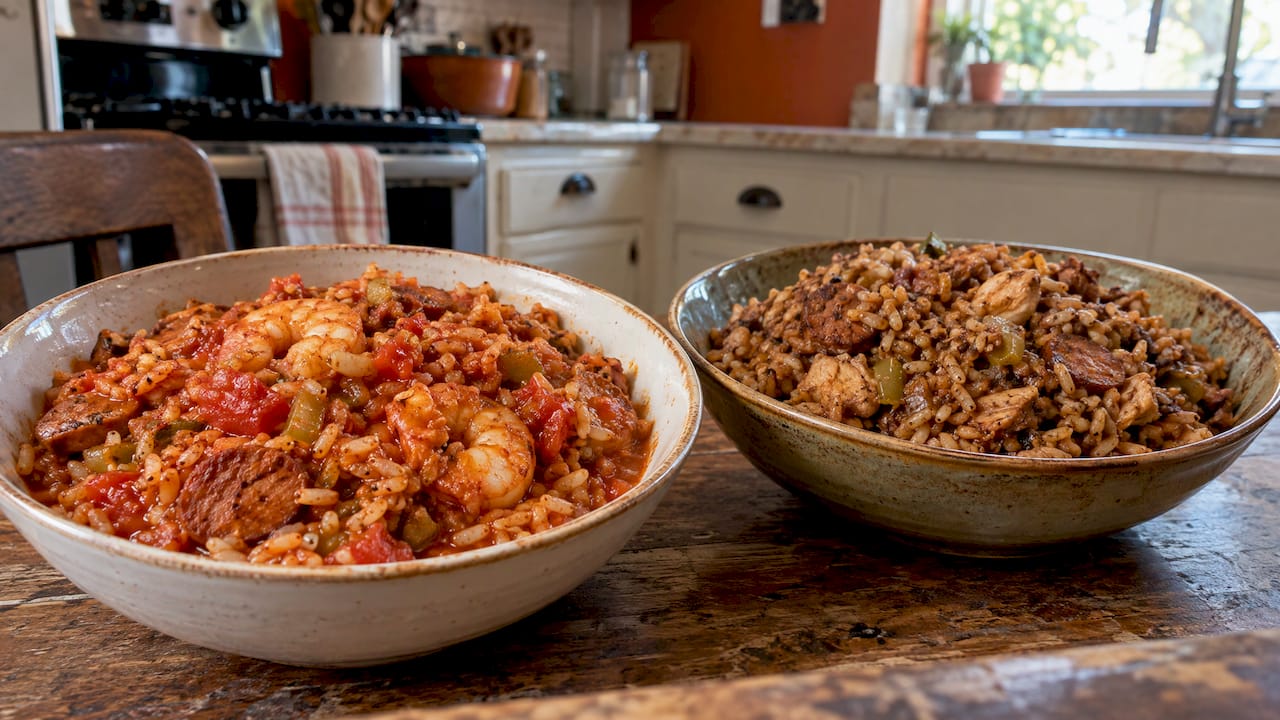
Both. Jambalaya is a shared dish. The Creole version, from New Orleans, often includes tomatoes, and the Cajun version usually leaves them out and gets its color from browning. Either one takes well to either seasoning.
Which one should you use?
Pick by the dish and by who is eating.
Reach for Cajun when you want heat and a peppery edge: dry rubs for chicken, pork and steak, fried chicken batter, spicy barbecue sauces, burgers and meatballs, seasoned fries and hash browns. Allrecipes lists all of these, along with gumbo and red beans and rice.
Reach for Creole when you want depth without much fire: shrimp and grits, potato salad, fried eggs, crawfish boils, tomato-based stews and jambalaya, which Delish suggests among its uses. Creole is also the easier choice for a family table where kids or heat-shy guests are eating.
Reach for either when the recipe just says Louisiana-style seasoning. Nothing will break.
How much to use
Chili Pepper Madness gives workable starting amounts that apply to either blend:
- Dry rub on chicken, pork or steak: 1 tablespoon per pound
- Shrimp or fish: 2 to 3 teaspoons per pound
- Gumbo, jambalaya or soup for 8: 1 to 2 tablespoons
- Roasted vegetables: 1 to 2 teaspoons per pound
- Dips, butters and sauces: ½ to 1 teaspoon per cup
Start at the low end, taste, and add more. If the blend is salty, hold back on other salt.
Swapping one for the other
When the jar you need is empty, use the other at the same quantity. MasterClass says a 1:1 swap works because the blends share base ingredients like pepper, garlic powder and onion powder. Expect Creole to give a more herbal flavor and less kick.
Two small adjustments keep the dish close to what the recipe intended:
- Creole in place of Cajun: add about ⅛ teaspoon of cayenne for more heat, as suggested by Food Republic.
- Cajun in place of Creole: the dish will run a little hotter and less herby, so add a pinch of dried thyme or oregano to bring some of the herbal note back.
If you have neither, Chili Pepper Madness offers a quick pantry mix of 2 teaspoons paprika, 1 teaspoon each garlic and onion powder, ½ teaspoon each cayenne and thyme or oregano, and ¼ teaspoon black pepper. It makes about 2 tablespoons and is used 1:1.
Tuning a blend to your kitchen
The real skill is knowing which knob to turn. Three do most of the work:
- Cayenne sets the heat. In a Creole-style recipe, cutting it to ½ teaspoon softens the blend and raising it to 2 teaspoons gives it a kick, a range given by PepperScale.
- Herbs set the character. Thyme, oregano and basil give the rounded Creole profile, and the Daring Gourmet’s Kimberly Killebrew explains in her Creole recipe that they bring earthy, savory, minty and woodsy notes, while sweet and smoked paprika add color, sweetness and smokiness.
- Salt sets how much you can use. A salt-free base lets you season the dish itself, so the blend never fights the recipe.
A good pattern is to keep one base you like and change one knob per batch. After two or three batches you will know exactly what your household prefers, and you can stop reading labels.
Our view: stop choosing between two jars
Most people ask whether Cajun or Creole is better. We think that is the wrong question. The two styles overlap so much that the label on the jar tells you less than the ingredient list, and the ingredient list is set by someone who has never met your family.
Cooking is about comfort. It is the pot of something warm that brings people to the table. Our blends are hand-crafted with that in mind, by a chef from the Bahamas who cares about authenticity and flavor that tastes like a home-cooked meal. The heat level, the herb level and the batch size should suit the people eating, not the average shopper.
That is why we built a subscription around choice. You pick the blend, choose the flavor profile, set the batch size, and get new options every month. The kid who wants mild and the parent who wants fire can both be happy at the same table.
Robert
Try a blend built around your taste
If you want to cook Louisiana-style food without hunting for the right jar, start with our easy Cajun seasoning blend. With a Pro membership, you can customize blends, adjust batch sizes, select flavor profiles, and get unlimited access to diverse blends and meal recipes, with new options added monthly.

Pro costs $5 per month or $40 per year, and a 30-day money-back guarantee backs it. See the Pro plan details, or browse all spice blend profiles first. For seafood nights, our seafood seasoning blend and shrimp seasoning guide pair well with what you have just learned.
FAQ
What does Creole seasoning taste like?
It tastes salty, savory and herby, with a gentle heat. Garlic, onion and paprika form the base, and thyme, oregano and basil round it out, as Tasting Table describes. The cayenne is usually a pinch rather than the main event.
What seasoning is closest to Creole?
Cajun seasoning is the closest match, and you can use it 1:1. Blackening seasoning also works at the same ratio, according to Chili Pepper Madness. Add a little dried thyme or oregano to a Cajun blend to bring back the herbal side.
Is Cajun or Creole seasoning spicier?
Cajun is usually the hotter of the two, because it leans on cayenne and black and white pepper. Individual blends vary, and SPICEography notes there is no published heat measurement, so read the label and see how high cayenne or red pepper sits in the list.
Can I use Cajun and Creole seasoning in the same recipes?
Yes, in nearly all of them. Use equal amounts, taste as you go, and remember that either blend may already contain salt. Use less salt elsewhere in the dish until you have tasted it.
Sources
- Creole vs. Cajun Food: What Are the Differences? (Food & Wine)
- Cajun vs. Creole Seasoning: A Comparison (MasterClass)
- What Is Cajun Seasoning and How Do You Make It At Home? (Allrecipes)
- What’s Really In Creole Seasoning? (Tasting Table)
- Creole Seasoning Recipe (The New York Times)
- Creole Seasoning, How to Make It (Delish)
- Cajun vs. Creole Food (Taste of Home)
- Cajun Spice Vs Creole (Food Republic)
- Creole Seasoning Recipe (Chili Pepper Madness)
- Cajun vs. Creole Seasoning (SPICEography)
- What’s A Good Creole Seasoning Substitute? (PepperScale)
- Creole Seasoning Recipe (The Daring Gourmet)
- What Is Local Gastronomy? A Food Culture Guide